Becoming Better At Being Who You Are
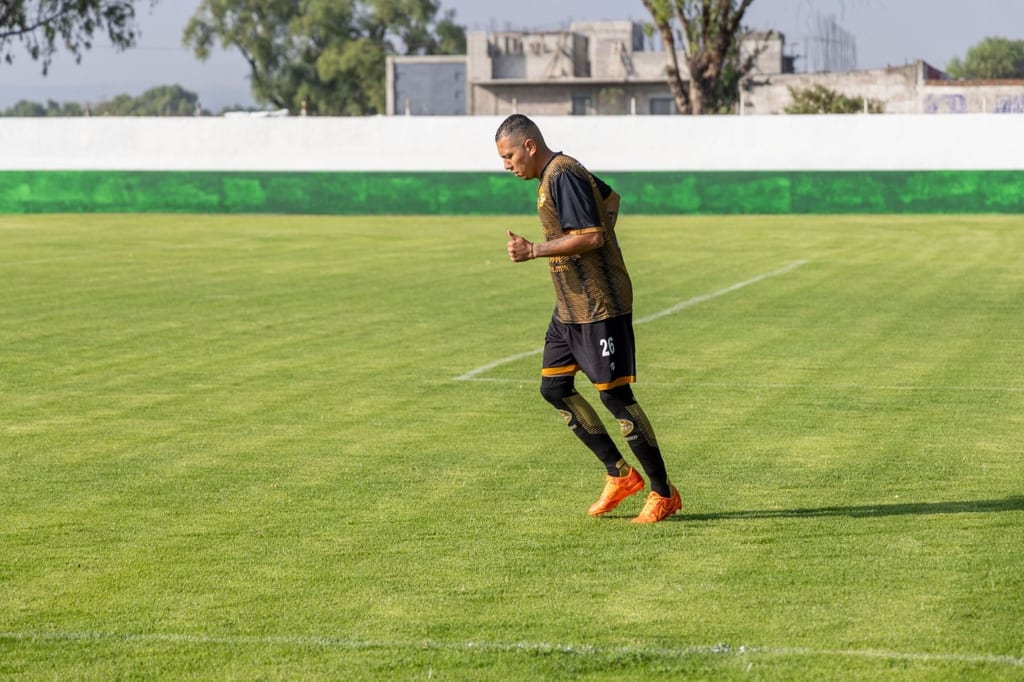
The Way We Approach Improvement
In football, growth does not always mean fixing what is missing. Sometimes it means understanding what works and building on it.
In football, we often work to correct weaknesses.
We identify mistakes, analyse shortcomings, and look for solutions to improve what is not working.
But improvement does not always follow the same path.
And above all, coaches, teams and players do not always face the same kind of journey.
In youth football, you build.
In adult football, you often have to compete first.
And this difference profoundly changes the coach’s priorities.
When A Weakness Becomes An Opportunity
 In youth football, the result of a match should not be the main measure by which a player’s development is evaluated.
Time is on the coach’s side.
A young player may have a technical weakness, difficulty reading the game, or a physical, coordinative or mental limitation.
That difficulty is not necessarily something to hide.
First and foremost, it is an area for development.
The coach’s role is to recognise it, understand its causes, and create the conditions for the player to work on it.
This does not mean turning every training session into a search for mistakes.
It means having the patience to guide the player through the process.
A player who is not yet effective with their weaker foot needs opportunities to use it.
A player who struggles to recognise a game situation needs to be placed in situations that help them learn to read it.
A player who struggles in one-on-one situations needs to experience situations that force them to confront that difficulty.
In youth football, we should not simply protect what a player already knows how to do. We also need to build what they cannot do yet.
That is why mistakes can become a tool.
Time allows players to make mistakes, correct them and try again.
Above all, it allows the coach to think about the player they will become, not only the player they are today.
When Time Becomes A Factor
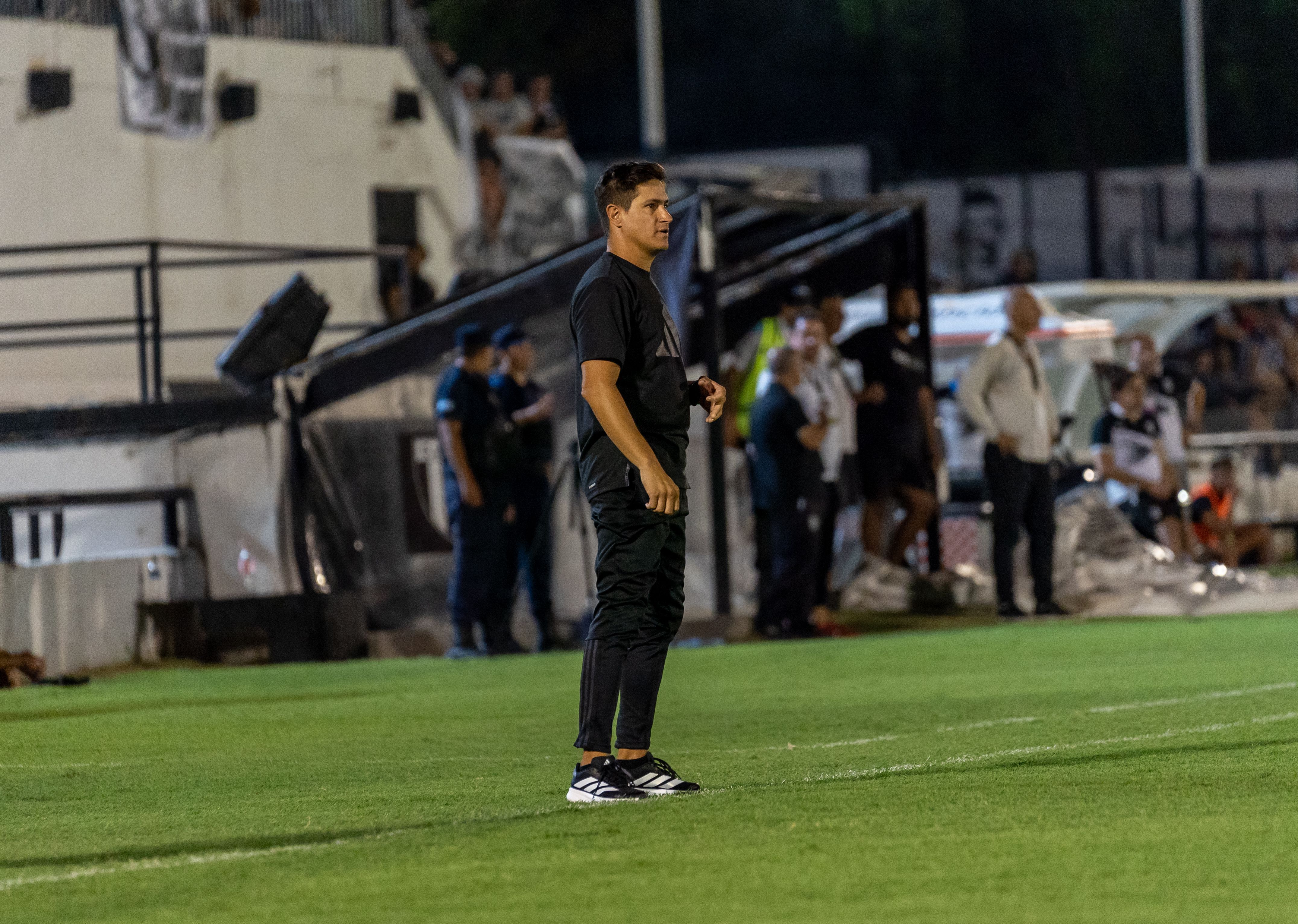 In adult football, the perspective changes.
The result carries a completely different weight.
A match can affect the league table, the club, the environment around the team, the players’ confidence and, inevitably, the coach’s position.
The time available to build is often limited.
And when time is limited, the training strategy has to change as well.
This does not mean stopping the process of correction.
It means deciding when to correct, how much to correct and, above all, what to correct.
A first team cannot be transformed in a few weeks into the team the coach would ideally like to have.
It has to become effective with the players available.
That is why one of the coach’s first responsibilities is to understand the context as quickly as possible.
Who are the players?
What can they do?
Where are they genuinely effective?
Which characteristics can be used for the benefit of the team?
Which situations allow them to express themselves at their best?
Before asking a team to become something different, you need to understand what it already is.
Not Every Weakness Needs To Be Fixed
There is an important difference between improving a weakness and preventing that weakness from affecting the team.
They are two different things.
A defender may struggle to build from the back.
A midfielder may not be particularly effective in one-on-one situations.
A striker may not be dominant in aerial duels.
The coach’s question should not always be:
How do I eliminate this weakness?
Sometimes it should be:
How can I build the game in a way that minimises the impact of this weakness while, at the same time, maximising what this player does particularly well?
This is where collective work becomes important.
A team can compensate for certain individual characteristics through relationships between players, distances, occupation of space and tactical choices.
Not everything that does not work needs to become a strength. Some things simply need to be managed.
And in the short term, that can be a much more effective choice.
Building Confidence Before Building Anything Else
There is another component that is often underestimated: confidence.
A team that feels it can do certain things well approaches difficulties differently.
Awareness of its own strengths can build self-esteem, self-efficacy and courage.
And courage in football is not an abstract concept.
It is being willing to ask for the ball when the match is on the line.
It is being willing to take on a duel.
It is having the ability to try again after making a mistake.
It is believing that a difficult situation can be faced.
For this reason, the coach does not simply have to improve a team.
They also have to create the psychological conditions that allow the team to express what it already knows how to do.
Constantly focusing on what is not working can become counterproductive.
If every training session becomes a list of problems to solve, and every match is analysed only through mistakes, there is a risk that the team begins to define itself through its shortcomings.
And a team that enters a match thinking mainly about what it must not get wrong will struggle to express its full potential.
After A Defeat, What Does A Team Really Need?
 It is perhaps after a defeat that this reflection becomes even more important.
After losing, the natural temptation is to look for everything that went wrong.
It is understandable.
But it is not always the most useful approach when preparing for the next match.
If the team has lost confidence, the first objective may not be to add more information.
It may be to restore certainty.
Remind the players of what worked.
Recreate situations in which they feel effective.
Reinforce behaviours that already belong to the team.
Restore belief.
This does not mean ignoring mistakes.
It means establishing a priority.
After a defeat, perhaps a team does not need to know more about its problems. It needs to regain the belief that it can face them.
After a victory, on the other hand, there may be more room to stop, analyse and work on areas for improvement.
Because confidence gained through a positive result can create a more favourable environment in which to address what still does not work.
First Understand, Then Intervene
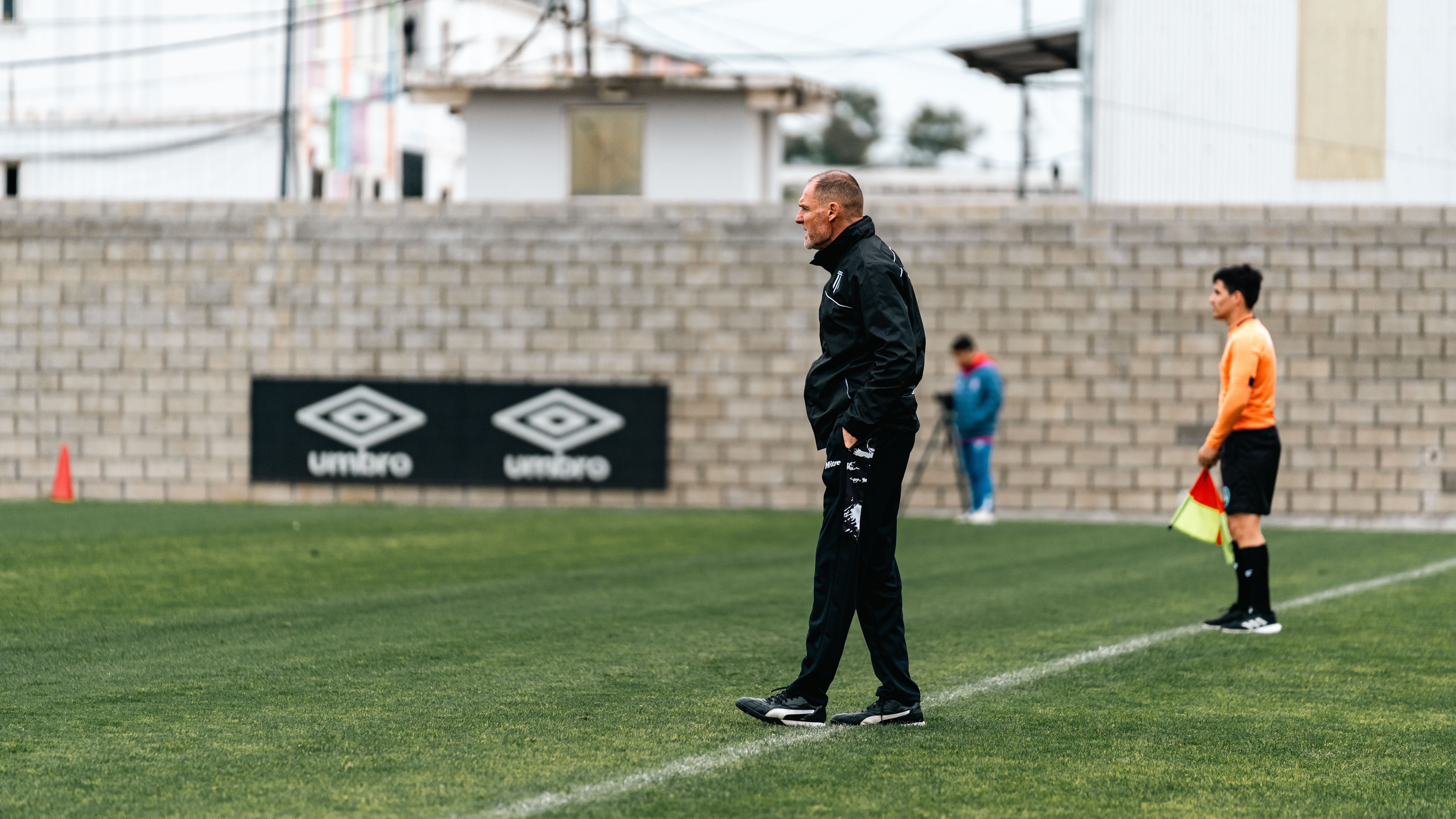 Coaching a first team therefore means, above all, reading the context.
There is no recipe that works every time.
There will be moments when a weakness needs to be addressed.
Others when it will be more important to consolidate a strength.
There will be players who need help improving a specific characteristic, and others who need to be placed in situations where they can make the most of what they already possess.
The coach’s ability is not simply to see what is missing. It is to understand what is needed in that particular moment.
In youth football, a weakness often represents a door towards the future.
In adult football, especially when time is limited, it may first be necessary to protect the present.
Not to stop improving.
But to create the conditions in which improvement can happen without losing what already works.
Because a team does not necessarily grow by becoming something different.
Sometimes it grows simply by becoming a more aware, more confident and more effective version of what it already is.
And perhaps this is one of the most difficult challenges for a coach:
to know a team well enough to understand not only what it needs to improve, but also what it must never stop being.
Beyond Football
The principle applies beyond the pitch.
In the growth of an individual, a group or an organisation, paying attention to what is missing is important.
But building everything around weaknesses can make us lose sight of what makes that group unique.
People grow when they are given the conditions to improve.
But they also grow when they recognise that they already have something worth building on.
The path is not always about becoming something we are not. Sometimes it is about understanding who we are more deeply and taking it further.
The Question
Is the real challenge to correct what is missing, or to build on what already works?
Related articles
Latest about 🧠 Mindset
See all
In Training, the Coach Is the Enemy. In Matches, the Coach Is the Ally.
🧠 MindsetIn modern football, we hear more and more about feedback and communication. Yet we rarely dive into the core question: when and how should a coach communicate with their players?

Summer Preparation Is About More Than Just the Legs
🧠 MindsetPre-season is arguably the most important period of the entire season. It is when the foundations are laid for everything that will follow in the months ahead.
Football Is (Also) an Individual Sport
🧠 MindsetFor a footballer to fully express his potential, he must first learn to be comfortable with himself. He must understand his limits, his strengths and his emotions. He must learn how to deal with pressure, mistakes and judgment.