
The Solitude of the Decisive Point: What Tennis Teaches About Football
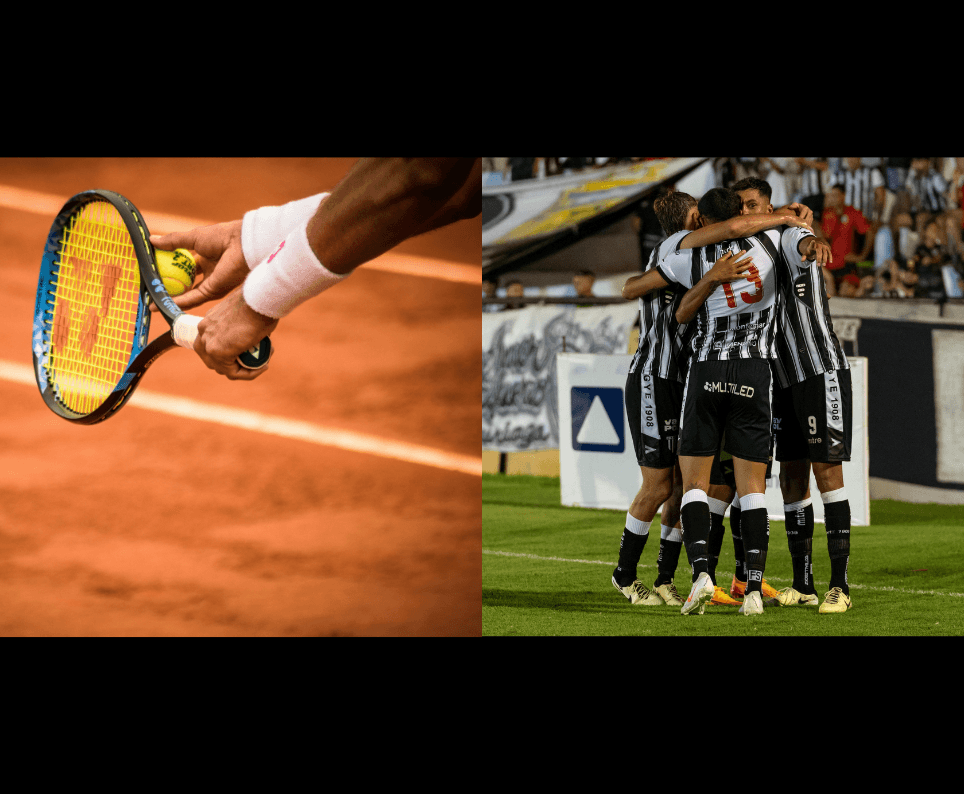
When Tennis Meets Football
Football has been my world since I was a child: first as a player, then as a coach. The smell of wet grass, the crisp sound of the ball being struck, the shouts bouncing between the bench and the pitch, the referee’s whistle signaling the start or the end of a battle. Every detail spoke the language of football.
Then, almost by chance, I started watching tennis. At first as a curious spectator, then as a fascinated observer. There, I discovered a new language, made of tense silences, gestures that carry the weight of judgment, a solitude that is rarely known in football. I began to ask myself: what can such an individual sport teach someone who lives and breathes team football?

Time Is Not an Ally
In tennis, time does not exist. It is not a variable. You can be on the court for three hours or five, but until you score the final point, you haven’t won. In football, on the other hand, time is an integral part of strategy. If you are ahead, you can try to manage, to slow down, to “play with the clock.” You can even go to the corner flag to let the seconds run out. In tennis, no: you cannot speculate. If you do not take responsibility for closing the match, sooner or later your opponent will do it. This made me reflect on the value of proactivity.

Closing the Point
Proactivity, understood as the “killer instinct,” is fundamental: I believe it is essential to train your team to be the architect of its own destiny, not a victim of the situations or variables that – as we know – can change a match in an instant. When the opponent is cornered, you have to close the point, the match. You cannot leave room for uncertainty, for hoping that time will pass in the right direction. It requires courage, clarity, and awareness. And all of this can and must be trained.

The Lesson of Solitude
Another aspect of tennis that fascinates me deeply is solitude. You are alone. You cannot blame a teammate, you cannot ask for a substitution. You cannot “hide.” You must face everything: shots, mistakes, fatigue, emotions. In football, in eleven, you can sometimes decide not to want the ball. Anyone who has played knows: there are moments when you hide, when you step away from responsibility. In tennis, no. This made me reflect on leadership.
Youth Development and Self-Efficacy
The youth development path is crucial to create athletes capable of making decisions, taking responsibility, courageous athletes who are not afraid to make mistakes. It is necessary to implement processes over the years that help young players train their self-efficacy. A concrete example could be to focus more – and better – on one-on-one situations, where all the nuances of solitude in football emerge. In those moments, the player is called to expose themselves, to act, to face uncertainty without external support. This builds confidence and a habit of taking risks.

The Coach As an Emotional Mirror
Another fundamental aspect is the style and communication of the coach. It is useless to preach courage verbally if you are biting your nails in tension, if your body language conveys fear, anxiety, insecurity. The coach is an emotional amplifier. And if you want a team that doesn’t hide, you must first be an example of presence, calm, and determination yourself.
Making Mistakes and Moving On
Then there is error. In tennis, if you miss a shot, the next one comes immediately. There is no time to despair. You must reset, move on. The dialogue is all within you. In football, the error can be diluted, shared, even forgotten among many others. But how valuable it is to teach our players to react immediately, to be ready for the “next point”?

The Freedom That Comes From Mistakes
The important action is not the mistake itself, but how one reacts to it. Understanding that a mistake is not a failure, but just an inevitable and valuable part of the growth process, is key. Once the athlete accepts and internalizes this concept, they become free. Free to act, to take risks, to play with courage without fearing the consequences of their actions. This is a mental and emotional achievement that must be cultivated every day, because only a free player can express their full potential.
The Mind Before the Feet
I was also struck by the mental aspect. Tennis players have a meticulous care for focus: routines, gestures, small rituals. Every detail serves to stay centered, lucid. In football, mental preparation is often underestimated, or delegated to others. Yet today we know how much it can make a difference. Working on emotions, control, and mental presence has become fundamental for us coaches as well.

Who Are You on the Field?
Finally, identity. Every tennis player builds a precise identity: style, character, attitude. It is an integral part of their game. In football, however, sometimes one gets lost in the collective, in the system. But every footballer should know who they are. They should ask themselves: who am I on the field? What do I bring to my team?
Conclusion
Every sport has a soul, but all speak to the same heart: that of the athlete. Whether you are alone on a tennis court or among ten others on a green field, what really makes the difference is your ability to be present, take responsibility, and seek victory without fear of losing.
Coaching a team today does not only mean conveying a formation or a playing idea. It means shaping men and women capable of facing mistakes, experiencing solitude, closing the decisive point, expressing their identity.
Tennis has taught me that solitude can be a harsh but fair teacher. And that even in football, where you are many, in the end, matches are always decided by the individuals who have the courage to take a step forward.
And it is there, in that step forward, that true victory begins.

And You, in Your Team, are You Training Players Ready to Take That Step?
If this article made you think, share it with other coaches, technicians, or enthusiasts. Write to me in the comments or by email with your opinion: do you agree with this parallel between tennis and football? Have you experienced something similar? Your experience can enrich mine too.
Related articles
Latest about 🌍 Beyond Football
See all
Beyond the Descent: What the Courage of Skiing Teaches Football
🌍 Beyond FootballThe start gate opens, the initial push breaks balance, and within seconds the athlete exceeds 100 km/h. In downhill skiing there is no feeling-out phase: every choice is immediate, every mistake potentially irreversible.