
Beyond the Descent: What the Courage of Skiing Teaches Football
The Choice Beyond the Start Gate
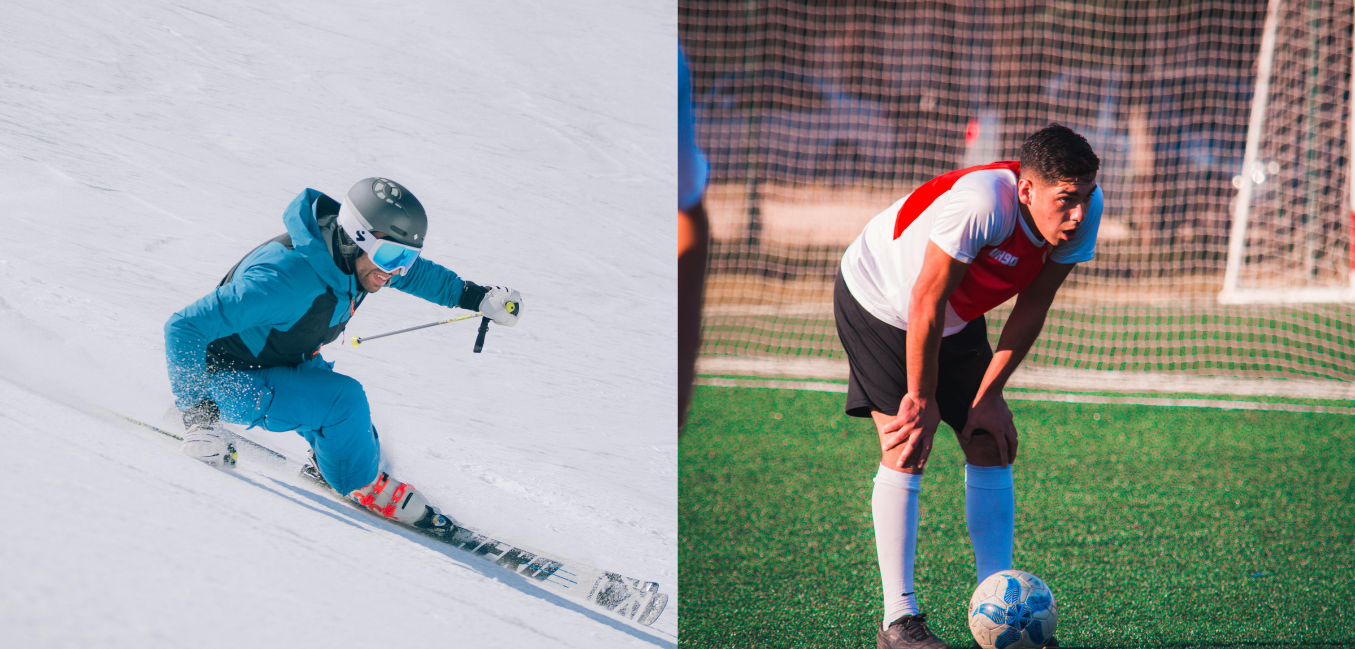
The start gate opens, the initial push breaks balance, and within seconds the athlete exceeds 100 km/h. In downhill skiing there is no feeling-out phase: every choice is immediate, every mistake potentially irreversible.
This is where the reflection begins on the decision of Lindsey Vonn to step into the start gate at the Milan–Cortina Winter Olympics despite a recently torn cruciate ligament. This is not the chronicle of a race. It is the story of a moment in which an athlete decides who to be.
Many have spoken of recklessness. Others of heroism. But perhaps the most honest word is another: coherence.
Coherence with an identity built over years of challenging gravity, speed, and the human limit. Coherence with the idea that, at times, choosing not to start means ceasing to recognize oneself.
When the fall came — and with it the fracture of her leg — the story could have stopped at pain, bad luck, regret. Instead, from her hospital bed, Vonn offered words that shift the meaning of the entire episode:
I tried. I dreamed. I jumped. And sometimes we fall… I hope you all have the courage to dare. Because the only failure in life is not trying.
This is not a motivational quote. It is a declaration of responsibility toward herself.

The Solitude of Speed
Those who watch downhill skiing from the outside see technique, courage, spectacle. Those who live it know it is, above all, solitude.
The skier starts alone. There is no teammate who can fix a wrong trajectory. There is no system that can protect against a misreading of the terrain.
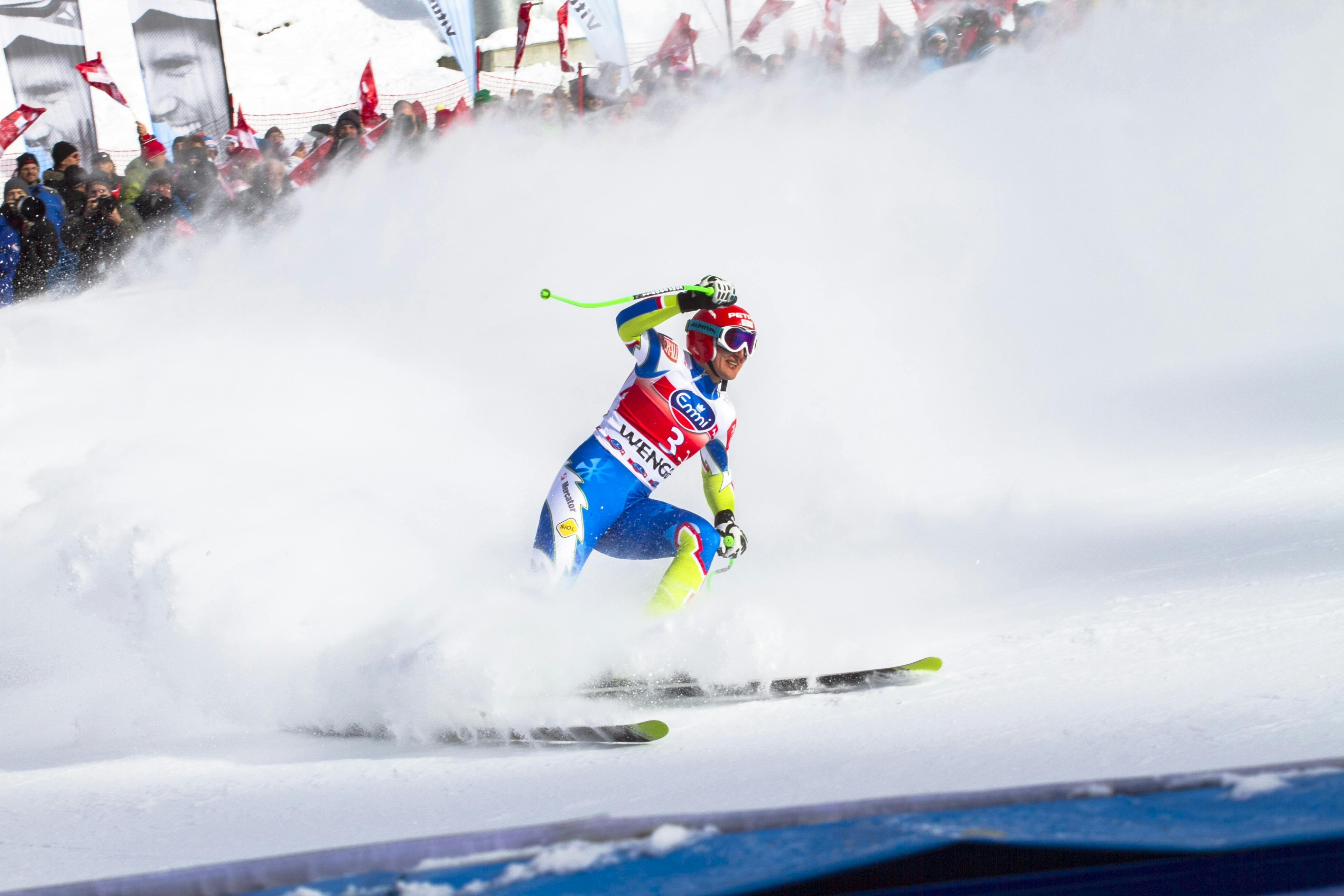
The mountain does not negotiate. Speed grants no second chances. At over 120 km/h, a delay of a few hundredths in choosing the line does not cost a goal: it can cost a ligament, a bone, sometimes a career.
It is total, individual responsibility, without filters.
And yet, they start anyway.
Not because they ignore the danger, but because they accept it as an integral part of their sporting identity.
Risk as a Choice
In football, the gravest mistake remains confined to the game: a conceded goal, a lost final, a compromised season. The pain is sporting, the wound symbolic, and time always offers a new opportunity.
In alpine skiing, however, the mistake leaves the field and enters life. A slightly wrong trajectory, an imperfect landing, a fraction of a second too late. The result is not only a lost race, but a ligament giving way, a bone breaking, a career interrupted. The body becomes the place where the choice imprints itself.
Yet, these athletes face the start gate knowing all this. They do not ignore the risk: they accept it. Not out of recklessness, but as a form of radical responsibility toward who they are and what they have chosen to be.
A silent affirmation: this is who I am, even when it is frightening.
Football cannot replicate that level of exposure. But it can ask itself the same question with the same clarity: what does it mean to compete when consequences truly matter?
Looking at the Mountain to Understand the Pitch
Football does not need to become more dangerous to become more authentic. But observing sports in which the stakes are higher can help us reconsider dynamics we take for granted.
In skiing there are no alibis. The mistake is naked, visible, impossible to dissolve into the collective. In football, by contrast, error melts into the team’s “we.” This protects, but sometimes weakens individual responsibility. Not to assign blame, but to develop awareness: knowing that every choice carries specific weight.
Likewise, preparation in skiing is not an option; it is a form of respect for one’s own safety. Every turn is visualized, every compression studied, every change of light anticipated. It is not obsession; it is survival. In football, where talent is often celebrated more than discipline, the mountain reminds us that freedom is born from mastery, not improvisation.
And then there is fear. Skiers do not eliminate it; they learn to coexist with it. They recognize it as a signal of presence, not weakness. In football, fear of making mistakes is often denied or masked — and precisely for this reason it ends up paralyzing. Perhaps educating athletes to dialogue with fear, rather than hide it, is one of the most valuable lessons we can draw.
When Identity is at Stake
Why does an athlete risk everything for an Olympic downhill?
Not for a medal. Not for a title. Not for applause.
But to remain faithful to who they are.
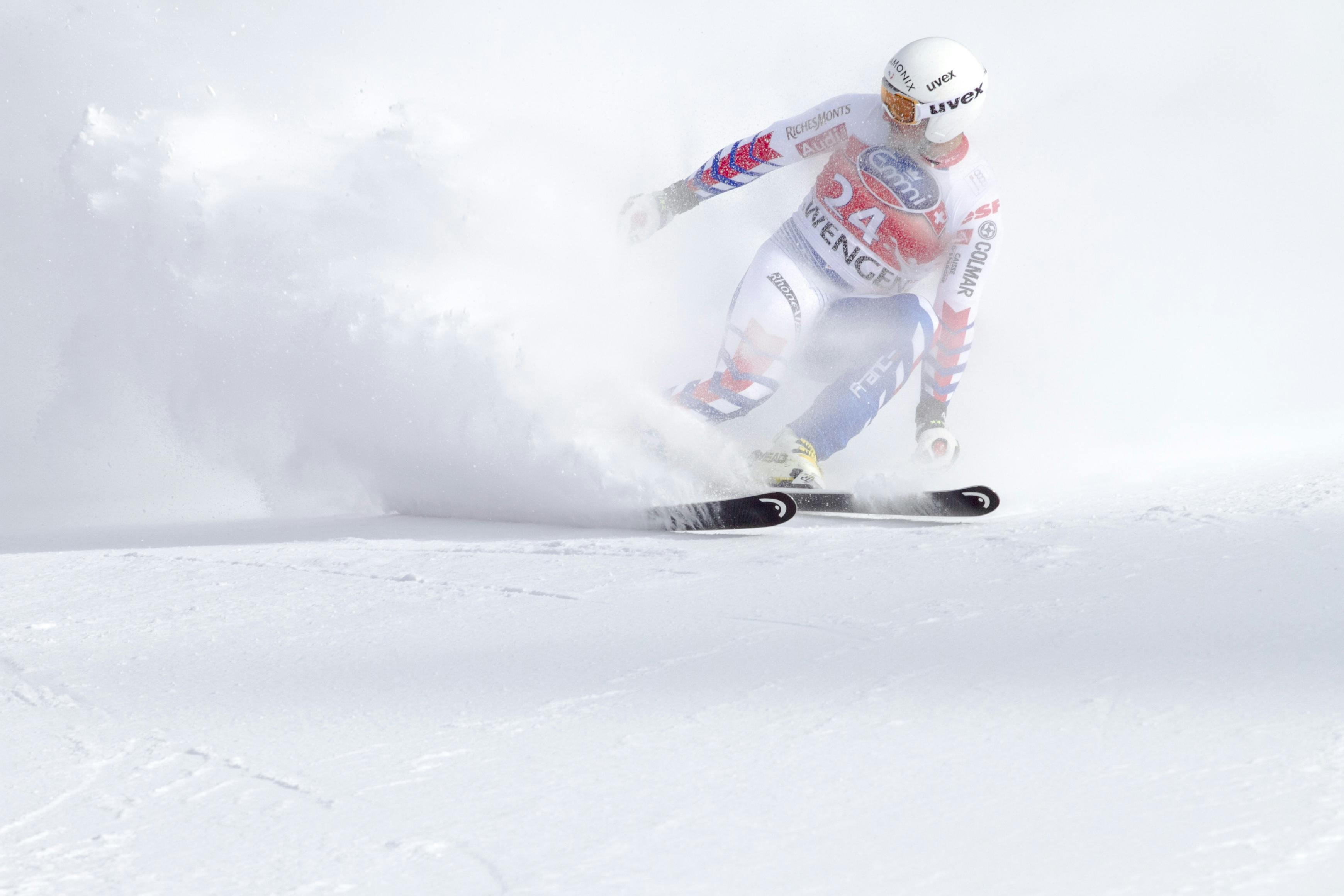
Elite athletes do not compete only to win. They compete to remain coherent with the image they have of themselves. At certain moments, stepping back means cracking that coherence, opening an invisible fracture that no rehabilitation can heal.
This is not an invitation to recklessness. It is an invitation to understand the depth of sporting choices.
Beyond Football, Beyond the Result
The story of Lindsey Vonn is not about victory or defeat. It is about courage, identity, and the relationship with risk. It is about what it means to choose to show up, even when the price is high.
For those who live football — coaches, players, observers — the question is not whether it is worth risking a leg for a match. The question is another, more uncomfortable and more necessary:
are we developing athletes who avoid mistakes, or athletes who have the courage to dare?
Because, ultimately, the difference between losing and failing lies right there. Losing is part of the game. Failing, perhaps, is never finding the courage to push beyond the start gate.
Let’s Continue the Reflection
If this article has made you look at sport from a different perspective, I invite you to continue the journey on Beyond the Pitch.
- What is the most difficult choice sport has forced you to face?
- Have you ever avoided a risk for fear of failure?
- How do you — or will you — train courage in the people you lead?
Share your reflection or write to me: dialogue, like sport, grows only when someone has the courage to step forward.
Related articles
Latest about 🌍 Beyond Football
See all
The Solitude of the Decisive Point: What Tennis Teaches About Football
🌍 Beyond FootballFootball has been my world since I was a child: first as a player, then as a coach. The smell of wet grass, the crisp sound of the ball being struck, the shouts bouncing between the bench and the pitch,